Tariffs, Freight, and Flowers: Why Your Costs Went Up
The tariff line moved five times in eighteen months. Here is where it actually landed.

If you buy flowers, printed goods, glassware or linens, your costs went up somewhere between the 2025 season and this one. That much is not in dispute. What is harder to establish is which line moved, by how much, and whether the thing everyone blames is the thing responsible.
We went to primary sources for this one. The United States Department of Agriculture's own report on the Colombian flower industry, the Bureau of Labor Statistics price indexes, the Federal Register, the Office of the United States Trade Representative, and the Congressional Research Service. We skipped the trade-press summaries, which in this subject are unusually unreliable, because the underlying policy changed five times in eighteen months and most explainers are describing a version of it that has since expired.
Here is what those documents actually say, as of September 2026.
When a supplier explains a price increase by saying "the tariffs," the useful follow-up is which one, and when it took effect.
1. The Tariff Line Moved Five Times, and It Did Not Land Where It Started
The short history matters, because almost every cost explanation you have heard this year is anchored to one of the earlier steps.
In April 2025, the administration imposed tariffs of at least 10 percent on imports from almost all United States trading partners, using emergency economic powers. For flowers specifically, the Department of Agriculture's Foreign Agricultural Service records the effect precisely: a 10 percent tariff imposed in April 2025, the first duty on Colombian flowers in over a decade, estimated by industry representatives to add more than $200 million a year in costs to the sector.1
On 20 February 2026 the Supreme Court held that the emergency statute the tariffs were built on does not give a president the authority to impose tariffs at all. Six Justices joined the holding and three dissented, and the Court did not touch tariffs imposed under other laws.2
Four days later a temporary import surcharge took its place. Proclamation 11012, signed 20 February 2026 and effective 24 February, imposed 10 percent on the value of articles imported into the United States, with exceptions, "for a period of 150 days." That clock ran out on 24 July 2026.3
And at 12:01am on 24 July 2026, the minute the surcharge expired, a new set of duties took effect under Section 301, the trade law the United States uses to respond to another country's practices. These followed investigations into 60 economies and how they enforce prohibitions on goods made with forced labor. The rate is 10 percent for some of those economies and 12.5 percent for the rest.4
That last step is the one in force now, and it is where the flower story gets specific.
Practical step: When a supplier explains an increase by "the tariffs," ask which one and when it took effect. An answer describing the April 2025 or February 2026 versions is describing a policy that has since expired.

2. Colombian and Ecuadorian Flowers Are No Longer in the Same Market
This is the finding that matters most to anyone buying stems, and it is stated plainly in the Trade Representative's notice.
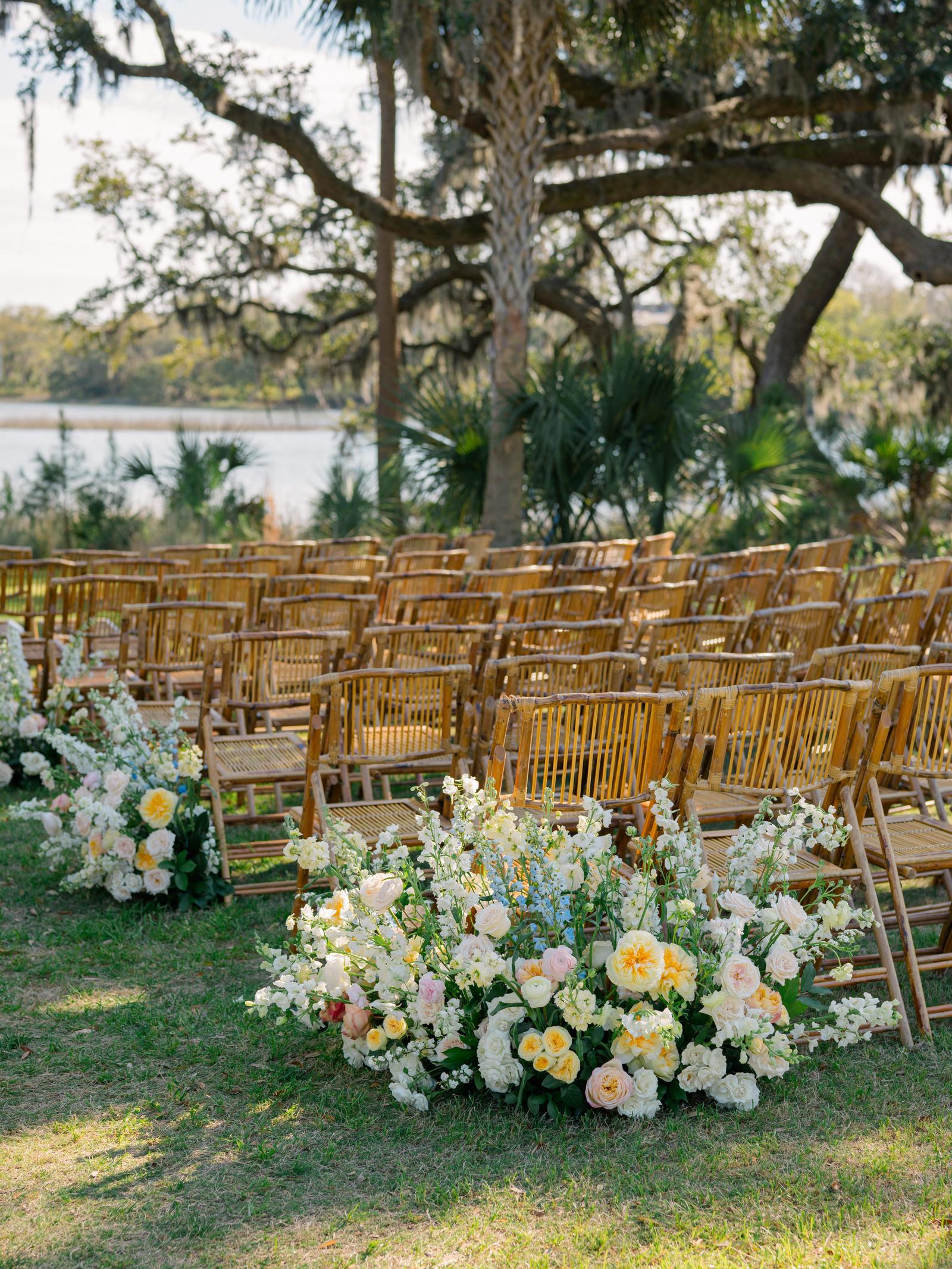
For Colombia, the Trade Representative determined to impose 12.5 percent on products of Colombia, subject to exemption lists. Cut flowers are not on any exemption list that applies to Colombia. For Ecuador the rate is 10 percent, and a long list of Ecuadorian goods is then exempted from it. That exemption list includes the cut flower tariff lines: fresh cut roses, carnations, chrysanthemums, orchids, lilies, alstroemeria and the catch-all line for other fresh cut flowers, plus dried and dyed flowers.4
So since 24 July 2026, Ecuadorian cut flowers enter with no additional duty, and Colombian cut flowers carry 12.5 percent on top of whatever duty already applied.
The scale is what makes that a structural event rather than a percentage. Nearly 80 percent of all flowers sold in the United States are imported, Colombia holds a 60 percent share of all flower imports by value, and roughly 80 percent of bouquets bought by American consumers contain Colombian stems. Colombia's position was built on the trade agreement in effect since May 2012, which eliminated tariffs on Colombian flowers and gave those growers a decisive cost advantage over competitors from countries outside the agreement, including Ecuador, whose roses faced a 6.8 percent duty.1
That advantage has now inverted. The Agriculture report, published in March 2026, saw it coming and said so: as the United States pursues new bilateral trade agreements, competitors that had faced higher duties could gain preferential access, potentially eroding or eliminating Colombia's longstanding cost advantage.1
Practical step: Ask your wholesaler which country each variety in your standard recipe is coming from this season. It is a question that had no commercial consequence for fifteen years and has one now.
Want to join the Style Me Pretty vendor directory for just $99?
3. The Tariff Is the Smaller Half of the Flower Increase
A tariff on its own would be a fixable story. The same Agriculture report documents three pressures landing on Colombian growers at once.
The tariff reduces net export earnings. A 23.7 percent minimum wage increase took effect in January 2026, and because labor accounts for 50 to 60 percent of total production costs and approximately 85 percent of flower workers earn the minimum wage, that increase moves nearly the entire cost base at the same time. And the Colombian peso appreciated nearly 12 percent against the dollar over the year, compressing margins for an industry that earns in dollars and pays its costs in pesos. Industry leaders quoted in the report describe the resulting squeeze as unprecedented.1
You can see the result in the United States price data. In the Bureau of Labor Statistics import price indexes for July 2026, released in August, the category covering live trees, plants, bulbs, cut flowers and ornamental foliage rose 5.6 percent over the previous twelve months. That was the largest twelve-month increase among the categories relevant to this article.5
One methodological point matters here, and it cuts in an unhelpful direction. The Bureau states that the prices used to build those indexes exclude duties, and that most are quoted at the foreign port before shipping. So 5.6 percent is the movement in the foreign price before any United States duty is added on top. The landed cost went up by more than that.6
Practical step: Reprice your floral minimums off this season's actual invoices rather than last season's, and do it before you quote 2027 weddings, which couples are booking now.

4. Paper, Glassware and Linens Moved Differently
Treating all four of these categories as one story would be misleading, because they behaved differently.
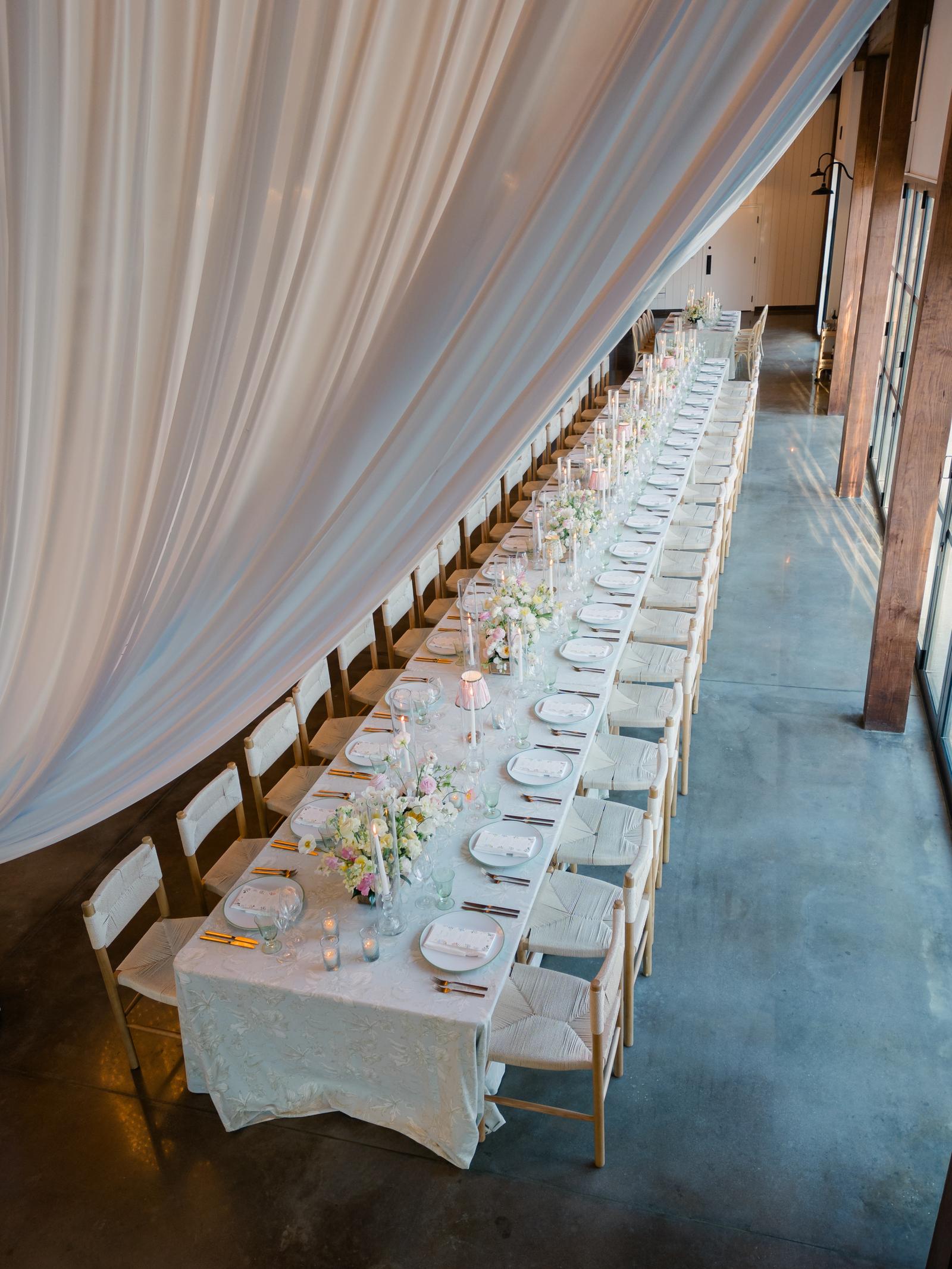
Over the twelve months to July 2026, the same import price indexes show paper and paperboard and articles of paper up 1.8 percent, textiles and textile articles up 1.0 percent, and glass and glassware up 0.5 percent. Ceramic products, where a lot of tableware sits, rose 4.4 percent. For context, non-fuel import prices overall rose 4.5 percent over the same twelve months, the largest yearly advance in that series in four years.5
So on the foreign price before duty, glassware and linens are close to flat and paper is up modestly, all of them well below the overall average. If your invitation suite or your rental linen jumped this year, the foreign price of the goods is a small part of the reason.
The duty side is where those categories are exposed. Under the same July 2026 action, goods of China carry an additional 12.5 percent on top of whatever already applied to that tariff line. A large share of the imported paper goods, glassware and table linen sold into the American event trade is Chinese in origin, so the duty lands on the delivered cost even though the foreign price barely moved.4
Practical step: For your three biggest hard-goods purchases, ask the supplier for the country of origin and the tariff line, which is the code that classifies a product at the border. Origin now changes the answer more than the product does.
5. The Freight Number That Matters Depends on Whether It Flies
Freight belongs in this article, and it is the part most often described wrongly.
Flowers move by air. Ocean freight currently accounts for about 8 percent of Colombian export volume against 92 percent by air, and exporters are managing freight volatility through greenhouse automation, long-term air capacity contracts and investment in premium varieties. During peak season, 30 to 35 fully loaded flights a day leave Colombia for Miami.1
Ocean rates, which is what most freight commentary is actually about, are elevated against the pre-2020 world without spiking. Drewry's World Container Index stood at $4,465 per 40ft container on 3 September 2026, which Drewry described as stable week on week. That index is the right gauge for a container of glassware or printed goods arriving from Asia, and the wrong gauge for a box of roses.7
Domestic trucking is going the other way. In the Bureau of Labor Statistics producer price index for July 2026, prices for truck transportation of freight fell 1.8 percent in the month. So the freight story is about air capacity into Miami and ocean containers from Asia, and it is not about the truck that brings the flowers from the wholesaler to your studio.8
Practical step: If a supplier quotes a freight surcharge, ask whether the goods came by air or by sea. The two are moving in different directions right now, and a surcharge should be able to name which one it is answering.

6. What to Do Between Now and Your 2027 Contracts
Costs rose inside a policy environment that changed five times in eighteen months and could change again, and most vendor contracts were written for a world where the delivered cost of goods held still. A few things are worth doing this fall.
Put an expiry on your quotes. A floral proposal that stays open for ninety days is a bet that no tariff line moves in ninety days, and that bet has lost five times running.
Write the substitution clause you actually want. Most floral contracts already allow substitution for availability. Very few allow it for cost, which is the thing that has been moving. If you would swap origin rather than variety when a line changes, say so in the contract in plain language.
Separate goods and labor on the estimate. When a couple sees one number rise, they read it as your prices going up. When they see the stem line move and the labor line hold, they read it as the market, which is what it is.
And keep the refund noise out of your planning. The Congressional Research Service notes that the Supreme Court's opinion did not address refunds of tariffs already collected under the invalidated authority, and that how importers might obtain them is unresolved. If your supplier is owed money from 2025, that is their balance sheet question rather than a reason to expect your 2027 costs to fall.2
Practical step: Before you send your next proposal, add a valid-until date and a substitution clause that covers origin as well as variety.
The Bigger Picture
The costs went up. The reasons are more specific, and more moveable, than the single word everyone uses for them.
For flowers, a duty that used to fall on Ecuador and not Colombia now falls on Colombia and not Ecuador, and the larger part of the increase is a wage rise and a currency move in the country that grows most of what ends up in an American bouquet. For paper, glass and linens, the goods themselves barely moved and the duty did. For freight, the relevant number depends entirely on whether your product flies or floats.
None of that makes a season cheaper. It does mean that when a client asks why the quote is higher, you can answer with a specific, and a specific answer is the difference between sounding expensive and sounding informed.
Sources
Every figure above comes from one of these. Where a number is a foreign price before duty rather than a delivered cost, the text says so. Rates are current as of 9 September 2026.
- United States Department of Agriculture, Foreign Agricultural Service, report CO2026-0004, "Colombian Flowers and the American Market After Six Decades of Growth," 24 March 2026.
- Congressional Research Service, Legal Sidebar LSB11398, "Supreme Court Rules Against Tariffs Imposed Under the International Emergency Economic Powers Act," 23 February 2026.
- Federal Register, Proclamation 11012, "Imposing a Temporary Import Surcharge To Address Fundamental International Payments Problems," signed 20 February 2026, effective 24 February 2026.
- Office of the United States Trade Representative, notice of actions in the Section 301 forced labor investigations, final action 23 July 2026, effective 24 July 2026, including the exemption annexes.
- United States Bureau of Labor Statistics, Import and Export Price Indexes, July 2026, released 18 August 2026, table by Harmonized System category.
- United States Bureau of Labor Statistics, Import and Export Price Indexes questions and answers, on the exclusion of duties.
- Drewry, World Container Index, assessment of 3 September 2026.
- United States Bureau of Labor Statistics, Producer Price Indexes, July 2026, released 13 August 2026.
Credits
Photographs from a wedding at The Dunlin on Johns Island, South Carolina, published on Style Me Pretty in September 2026.
Additional credits: Event Design and Event Planning: Vetri Events | Cinematography: Haley Sirisky Videography | Floral Design: Festoon | Cake, Catering and Wedding Venue: The Dunlin, Auberge | Invitations: Julie King Studio | Band: The Rivertown Band | Rentals: Adorn Charleston | Bridal Aid: Cacky's Bridal Aid | Beauty: Charleston Bridal Collab | Dance Floor Decal: Charleston Wraps | Rentals: Cheers Charleston | Rentals: Curated Events Charleston | Custom Escort Wall: K&J Lit Rentals | Rentals: LIT Charleston | Content Creator: Love Being in the Moment | Linens: Nuage Designs | Ceremony Strings: Palmetto Strings | Linens: Stradley Davidson Linen Collective