The Destination Wedding Shift
More days, more money per head, and a guest list that gets on a plane. Here is what is actually growing.

If it feels like more of your inquiries end with "we're thinking about doing it abroad," that is not only your inbox.
The difficulty in writing about this is that the United States does not count it. No federal agency records how many American couples marry overseas, so anyone quoting you a clean national percentage is quoting a survey rather than a count. What does exist, and what is unusually good, is the data the destinations themselves publish, because for those places weddings are a tourism export and get measured like one.
Read across those sources and the interesting finding is about the product rather than the passport. The wedding that is growing abroad has a specific shape, and it is a different shape from the one most vendors quote against.
The money is growing faster than the guest count. That is the part worth understanding, because it changes what a destination wedding is competing with you for.
1. What Is Growing Is a Different Kind of Wedding
Two countries publish enough detail to describe the event itself, and they describe the same animal at two different scales.
In Italy, the average foreign wedding in 2025 ran to 67,000 euros, up 8.9 percent on the year before, with average attendance of 64.6 guests. Those weddings generated over three million guest nights between them.1 2
In Greece, a market study presented in April 2026 under the auspices of the Greek National Tourism Organisation and the Greek Tourism Confederation puts the average destination wedding budget at 157,300 euros excluding tax, with about 130 guests staying an average of four nights.3
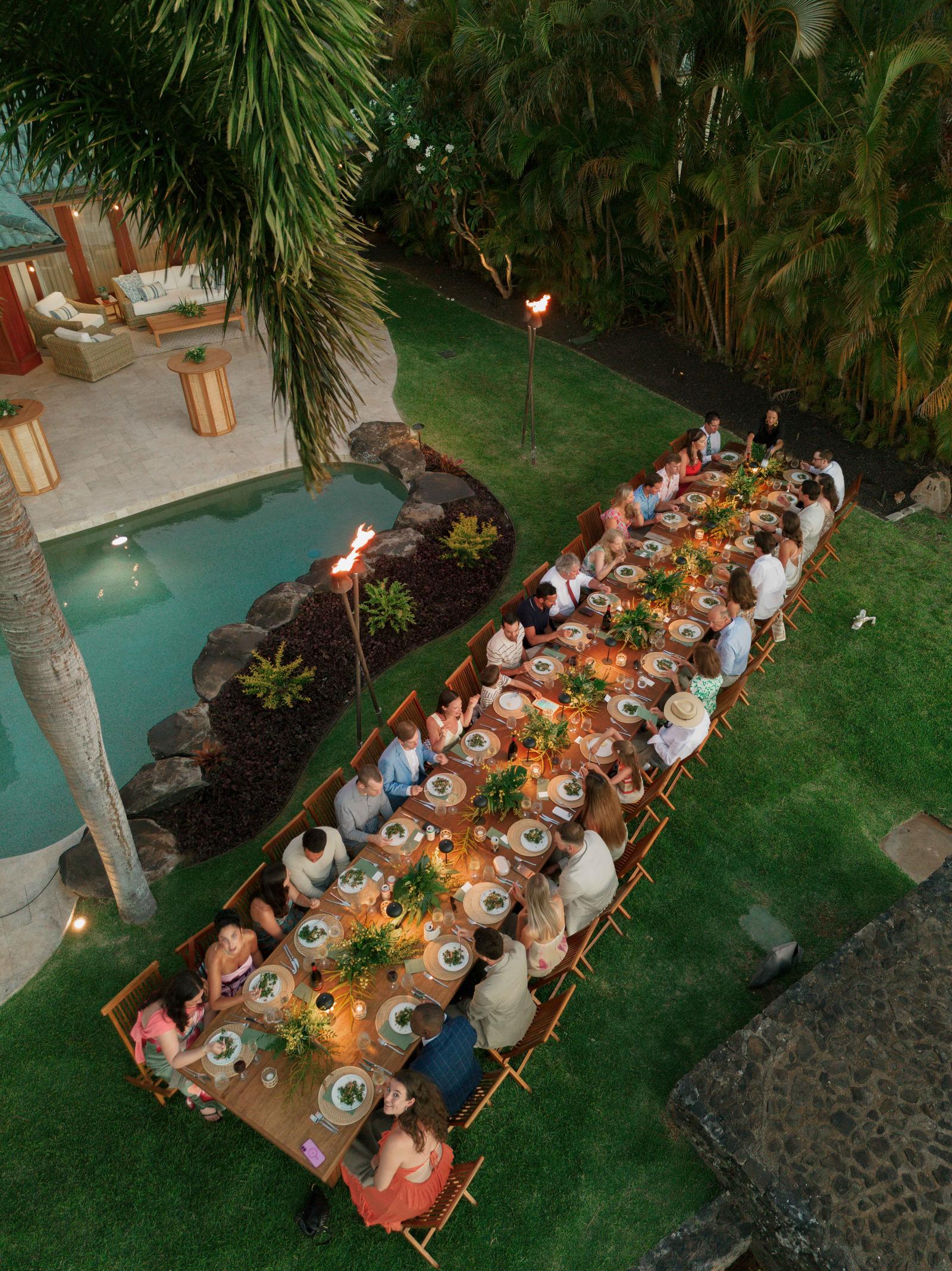
The guest counts differ, and the shared feature is the one that matters to a vendor. Both are events that book a whole guest list into a place for several nights and spend far more per head than a single Saturday does. Three million guest nights is not a wedding statistic, it is a hotel statistic, and that is the point. Couples are buying several days of somewhere rather than eight hours of something.
Practical step: Look at your own average booking and ask what it would need to become to sit alongside those numbers. In most categories the answer is not a higher day rate, it is a longer engagement with the couple across more of the weekend.
2. The Market That Counts It Is Up on Both Measures
Italy is the one country that publishes an actual annual count of weddings held there by foreign couples, which makes it the closest thing to a scoreboard this subject has.
Its Ministry of Tourism published the 2025 figures in February 2026, drawn from the destination wedding observatory run by Convention Bureau Italia and its Italy for Weddings division, with the research carried out by the Centro Studi Turistici in Florence. Approximately 16,700 foreign weddings were held in Italy in 2025, an increase of 9.8 percent on the year before, and the sector's value passed 1.1 billion euros, up 19.6 percent.1
Volume grew about 10 percent and value grew about 20. The events multiplied and they also got more expensive, which is a stronger signal than either number alone.
And the nationality split is the number an American vendor should sit with. The United States accounted for 31.7 percent of those couples, the largest single market, ahead of the United Kingdom at 20.7 percent and Germany at 7.8 percent. Nearly half came from outside Europe altogether.1 2
Practical step: If you work in a category that travels, look at your last two years of lost inquiries and count how many named a country. That is your own version of this number.
3. Countries Are Building the Category on Purpose
The most underrated evidence here is institutional. National tourism bodies do not commission observatories and market studies for segments they consider marginal.
Italy runs a standing destination wedding observatory, publishes its findings through the Ministry of Tourism, and forecasts a further 5.1 percent growth in events for 2026, with the peak months near saturation and couples moving into the periods on either side.2
Greece went a step further and set out to size the opportunity. The study presented at the Destination Weddings Tourism Forum in Athens in April 2026, produced by the research firm Focus Bari, found that 77 percent of weddings run by Greek wedding planners involve couples from abroad, and ranked the United States as the strongest source market, ahead of the United Kingdom, Australia and Canada. Its headline number is a projection rather than a count: under a base scenario assuming 60 percent market participation, Greece could host around 11,500 destination weddings a year and generate 1.82 billion euros in direct spending, with the upper estimate reaching 2.43 billion.3
Treat that Greek figure as an ambition with a government behind it. That is still worth knowing, because ambition with a government behind it turns into venues, licensing, marketing budgets and direct flights, and those are what actually move couples.
Practical step: When a destination starts publishing research about weddings, that is an early signal it is about to start marketing to your couples. Watch what the tourism boards publish, not just what the venues post.
Want to join the Style Me Pretty vendor directory for just $99?
4. The Travel Underneath It Is at a Record
A wedding abroad depends on something simpler than a wedding trend, which is a group of people willing to get on a plane. Two independent counts say that willingness is above its pre-pandemic level and still rising.
The National Travel and Tourism Office, part of the Commerce Department, reports that total United States citizen international departures were 9,308,594 in March 2026, an increase of 5.2 percent on March 2025 and 111.2 percent of departures in the same month of 2019.4
Globally the picture is the same. UN Tourism recorded an estimated 1.52 billion international tourist arrivals in 2025, almost 60 million more than in 2024 and a post-pandemic record, with arrivals up a further 2 percent in the first quarter of 2026.5
Neither of those is a wedding number and neither should be read as one. What they establish is that the thing a destination wedding asks of sixty or a hundred guests, which is a passport and a week of annual leave, is something more people are already doing than were doing it before 2020. The ask is landing on an audience that is used to it, and that is the single biggest change since the last time most vendors thought hard about this.
Practical step: Keep both of these in your pocket for the couple who says their guests will never travel. That objection was stronger three years ago than it is now.

5. Their Peak Is Your Shoulder Season
This is the part that should change how you think about your own calendar.
In Italy, the third quarter accounts for 44.5 percent of foreign weddings, and September alone is 21.4 percent, the single largest month of the year. The second quarter is 37.7 percent and slipping slightly. The fourth quarter is 14.3 percent and it is the part that is growing, up 2.5 percent. The first quarter is a rounding error at 1.3 percent.2
Read that against your own year. The months when a vendor at home has room, late autumn especially, are the months this market is expanding into, and the Greek study's four-night average points the same way: an event that occupies a long weekend travels more easily outside high summer than a single Saturday does.3
So the competitive pressure is not evenly distributed across your year. It is concentrated in September, and it is spreading into the part of the calendar you were counting on being quiet.
Practical step: Look at your September bookings over the last three years against the rest of your fall. If September is softening while October holds, this is a plausible reason and it is worth knowing before you build next year's marketing around it.
6. What to Do About It
If your work travels, and photographers, planners and designers mostly can, the mechanics are unglamorous and they decide whether the job makes money. Travel days need to be priced as working days rather than absorbed. Equipment and insurance need to actually cover the country you are going to. The legal side of a marriage abroad varies enormously and is not your job to advise on, but knowing that it varies, and pointing couples to the relevant consulate early, is the difference between a smooth process and a crisis in month eight.
The structural point is that destination work is a referral market before it is a search market. Couples find a planner or a venue first, and the planner brings their people. Being known to the planners and venues already working there beats optimizing a page for a country you have never shot in.
If your work does not travel, the couple weighing a wedding abroad against your region is comparing an experience over several days with a single day at home, and price is the wrong lever to answer that with. The domestic version competes on the same terms the destination market is winning on: more time, a setting that feels chosen, and a guest experience that runs longer than eight hours. Vendors who package a weekend rather than a day, who can point to a venue nobody in the couple's circle has already used, and who talk about the whole stay are selling against the thing that is actually taking the booking.
Practical step: Whichever side you are on, count the days rather than the hours. If you travel, price every day door to door. If you do not, write down what a couple gets from four days abroad that they cannot get from one Saturday with you, then decide which of those you could actually offer.
The Bigger Picture
Put the sources side by side and they agree on the direction. The one market that publishes a count is up almost 10 percent in volume and almost 20 in value. A second country's tourism bodies have commissioned research to go after the same couples. International travel is at a post-pandemic record and American departures are running above 2019. Americans are the largest single group in the market that counts them and the strongest source market in the one that is building.
What nobody can tell you, because nobody counts it, is what share of American weddings this now represents. Treat any confident number on that with the same suspicion you would give any other statistic that cannot be traced to somebody who actually counted.
The useful version is narrower and more actionable. What is growing is a multi-day event with a guest list that travels and a budget that reflects it. Your September is somebody else's peak. The shoulder season is where the growth is going next. And the couples choosing it are buying several days of somewhere rather than a cheaper wedding.
Sources
Every figure above comes from a government body, a national trade body or a United Nations agency. Where a number is a projection rather than a count, the text says so. No United States agency publishes a count of American weddings held abroad, so this piece gives no national percentage.
- Ministero del Turismo (Italy), report on foreign weddings in Italy, published February 2026, carrying the Osservatorio Destination Wedding figures presented on 18 February 2026.
- Convention Bureau Italia, Italy for Weddings, Osservatorio Destination Wedding, research by Centro Studi Turistici, Florence, 2026.
- Focus Bari, "Saying Yes to Greece: Destination Weddings in Greece, Mapping the Market", presented at the Destination Weddings Tourism Forum, Athens, 29 April 2026, under the auspices of the Greek National Tourism Organisation and the Greek Tourism Confederation. The 11,500 weddings and the 1.82 billion euro figure are a modelled scenario, not a count.
- United States Department of Commerce, International Trade Administration, National Travel and Tourism Office, March 2026 total international travel volume.
- UN Tourism, World Tourism Barometer, January 2026 issue for the 2025 total and the first quarter 2026 update.
Credits
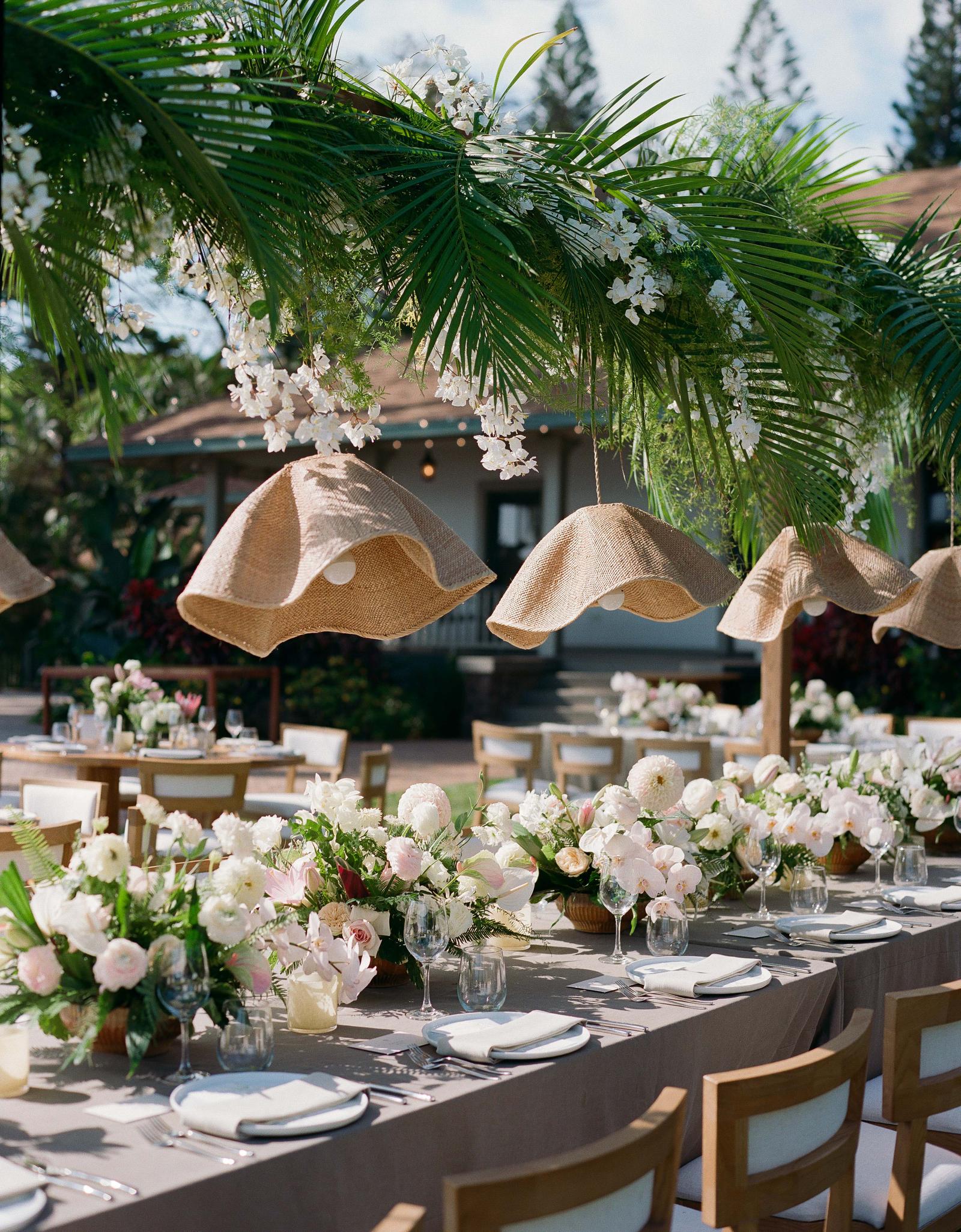
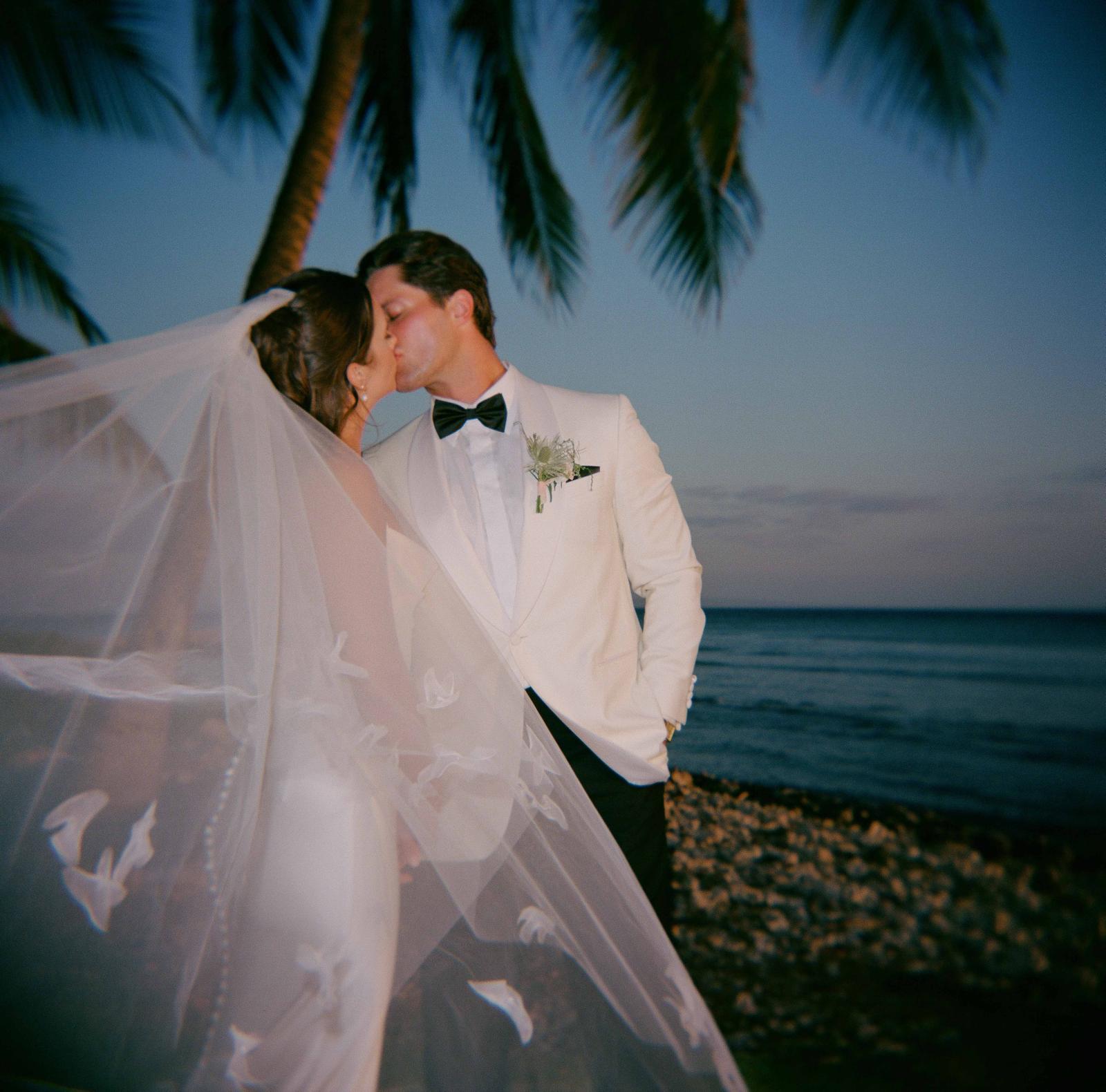
Photographs from a wedding on Maui, published on Style Me Pretty in September 2026.
Additional credits: Cinematography: No Ka Oi Films | Floral Design: Mandy Grace Floral & Event Design | Catering and Mixologist: Cutting Edge Catering | Calligrapher: Miss B Calligraphy | DJ: KCK Entertainment | Rentals: Artisan Events | Musician: Marvin Tevaga | Stylist: Maui Makeup Artistry | Rentals: Refinery and Co | Paper: Swell Press | Linen Rentals: Theoni Collection | Transportation: Primo VIP | Venue: Private Venue