The Off Season Is When Next Season Gets Won
Three things worth building while your calendar is quiet, since waiting until you are busy again means they never get built.
Every wedding business has a stretch of the year that feels like it goes quiet. For most photographers, planners, and florists in the US, that stretch lands somewhere between November and March, after the last reception of the year and before the first walkthrough of the next one. The inbox slows down. The calendar has gaps. It is tempting to treat those weeks as a break.
That instinct gets the timing backwards. The couples who will book you for next fall are getting engaged right now, over the same holidays that feel slow on your calendar. They are searching, comparing, and reading long before they ever send an inquiry. What they find when they search was written, filmed, or set up months before they typed anything into Google.
Three specific things built during those quiet weeks, search-ready content, an email sequence, and one real resource, keep selling long after you have logged off for the season. Here is what building each one actually looks like.
The vendors who fill their calendar fastest each season used their slowest weeks to build something that kept working after they stopped touching it. Everything below is how to build one of those three things in the time you actually have this off season.
1. The Content You Need in October Gets Written in January
Search engines do not work on the same timeline as your calendar. Content that eventually ranks on Google's first page usually takes somewhere between two and six months to get there, and that is only true for the small share of pages that rank at all. One widely cited study that tracked two million pages from the moment they were first published found that just 5.7 percent of them reached the top 10 results for any search term within a year.1 The pages that do make it tend to be old: on average, a page holding the very top spot for its topic has been live for close to three years.
For a wedding vendor, that means the blog post explaining how to plan a redwood forest ceremony, or the guide to what a wedding band actually costs, is not something you write the week a couple asks. If someone searches for that answer next October, the post that answers them needs to already exist by then. For most vendors, the off season is the only real window to write it before it's needed.
Practical step: Pick the one page on your site that couples ask about most before they ever book (how to choose a ceremony time, what a florist needs to know about a venue, how many hours of coverage a full day actually takes) and publish it this month, even though it won't show up in search for months.
2. Turn Last Season's Weddings Into Next Season's Proof
The off season is also the one time of year you have real, finished weddings to draw from and no new ones distracting you from writing about them. Most vendors use that time to post a highlight reel: pretty photos, a few adjectives, done. The couples deciding whether to book you are looking for something more specific than that.
This matters more now than it used to. In HubSpot's 2026 State of Marketing report, based on a survey of more than 1,500 marketers, 62.7 percent of respondents said the industry needs more unique, human-centered content to compete with the flood of AI-generated material already online.2 A recap of a real wedding, with the specific detail that only comes from actually being there, gives a couple exactly the kind of unique they cannot get from a chatbot.
Instead of writing that you loved a fall wedding, write the version with the actual thing that happened: the guest count that ruled out a barn venue, the vendor who agreed to move a delivery window, the timeline call that would have caused a bottleneck at golden hour if no one had caught it. That is the post a couple bookmarks and forwards to their partner.
Practical step: Go through the weddings you worked this year and pick the one with a real, specific problem you solved. Write that story instead of a highlight reel.
3. Build the Nurture Sequence You've Never Had Time to Write
An email sequence is a short series of emails that goes out automatically after someone takes one action, in this case, filling out your inquiry form, without you writing a single one of them in the moment. Most wedding vendors do not have one, for a simple reason: building it takes an uninterrupted afternoon, and during a busy season there is no such thing.
Marketers who track email performance closely see the same pattern across industries: a short automated sequence sent right after someone raises their hand converts far better than a one-off email sent to your whole list. Klaviyo's 2026 benchmark data, drawn from its e-commerce customer base, found that automated sequences click at more than three times the rate of one-off campaigns (5.58 percent versus 1.69 percent) and generate close to eighteen times more revenue per recipient than broadcast sends.3 The same mechanism applies to a wedding inquiry: a message sent at the moment someone is paying attention outperforms a message sent whenever you get around to it.
A working sequence does not need to be long. One email that goes out the moment someone inquires. A second, two days later, answering the questions you get asked on nearly every call (your price range, your availability, what makes you different). A third, about a week later, walking through one real wedding in detail. A fourth, ten days after that, a short, low-pressure check-in for anyone who has gone quiet.
Practical step: Write four emails, not forty. Set them up once in whatever tool you already use to send email, and let the sequence run through all of next season without you touching it again.
Want to join the Style Me Pretty vendor directory for just $99?
4. Answer the Questions Couples Ask Before They Ever Message You
Every vendor answers the same handful of questions on nearly every first call. How many hours of coverage do we actually need. What does a wedding band cost before all the add-ons. How far in advance should we book a florist. Couples ask Google these questions before they ever ask you, which means the vendor who answered them in writing months earlier is the one who shows up when they search.
Writing the answer down works like the email you would have sent anyway, just published where a search engine can find it instead of sent once to one couple.
Practical step: Write down the five questions you answer in almost every first call and turn each one into its own short page or post, in plain language, with a real number or a real range wherever you can give one.
5. One Big Thing Beats Twelve Small Things
Given a few open weeks, most vendors default to posting more: more captions, more reels, more one-off tips scattered across a feed that nobody scrolls back through. A single substantial resource, a full wedding day timeline template, a real breakdown of what a redwood forest ceremony takes to plan, a detailed guide to choosing a wedding band, does more work than a month of scattered posts because it can be used more than once.
One real resource built this off season can seed a quarter's worth of social captions, answer half your email inquiries by link, and give search engines something substantial to rank instead of one more short post that disappears in a day. Twelve small posts rarely add up to anything a couple remembers. One real resource is the thing they save.
Practical step: Build one real resource this off season and get a full quarter of social posts, emails, and inquiry answers out of that single piece instead of starting from scratch every week.
The Bigger Picture
Building these three things during your slowest weeks means picking one search-ready post, one email sequence, and one real resource, then finishing them before the calendar fills back up. The post you publish in January quietly waits for the couple who searches your name in August, opens the email your business sent while you were at a shoot, and books before you've finished your coffee.
Sources
- Ahrefs' study of two million pages tracked from first crawl, “How Long Does It Take to Rank in Google?”
- HubSpot's 2026 State of Marketing report, based on a survey of more than 1,500 global marketers.
- Klaviyo's 2026 email marketing benchmark report, based on its e-commerce customer sending data.
Credits
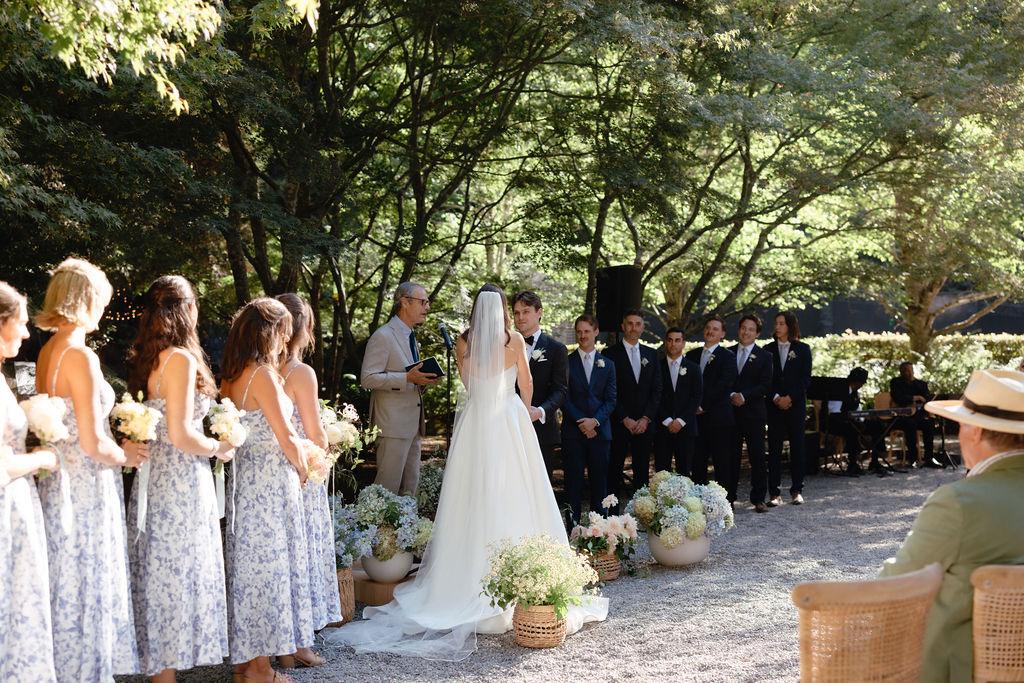
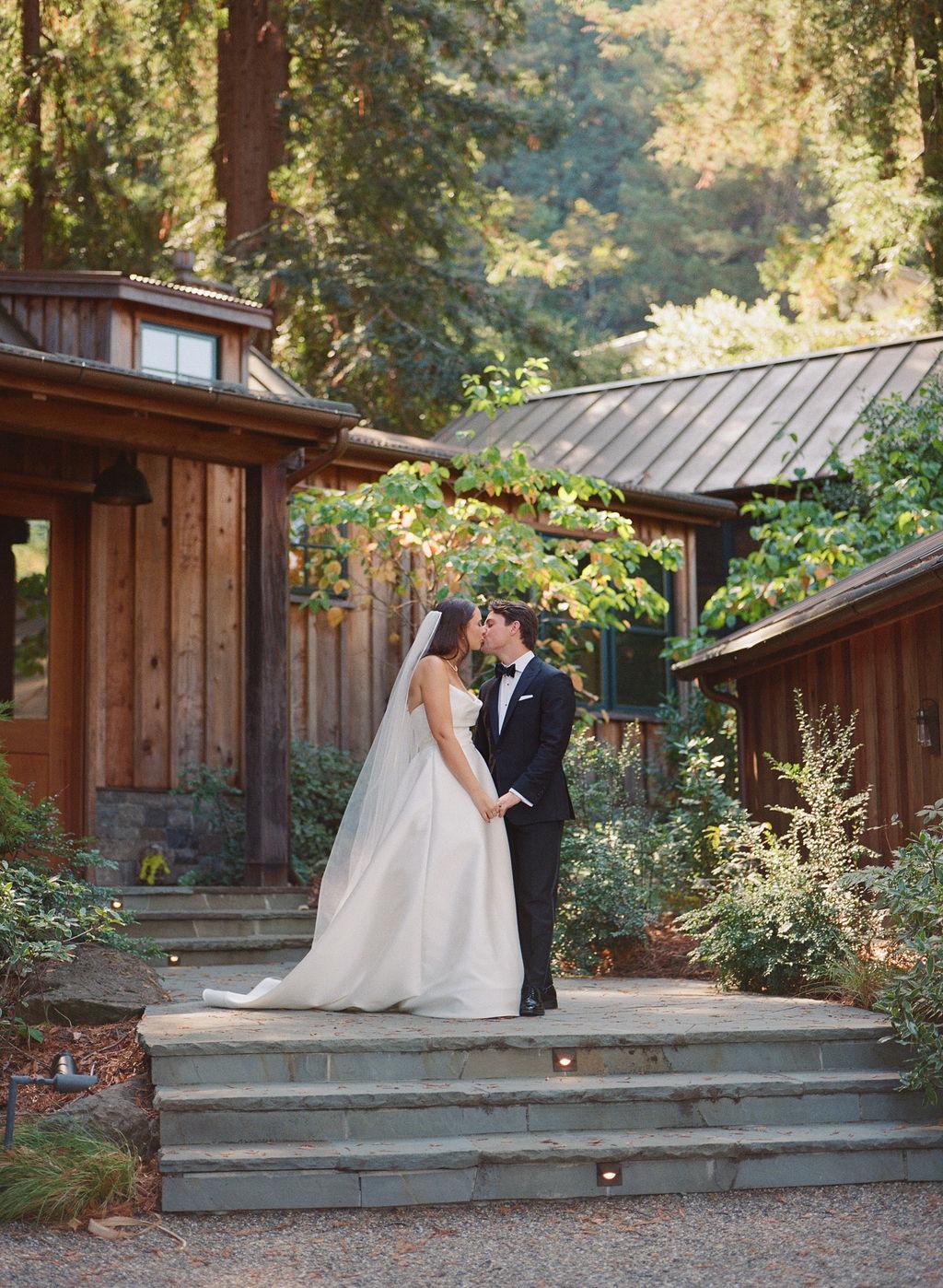
Photographs from a wedding in Marin County, California, published on Style Me Pretty in July 2026.
Event Planning & Design: Willa Via Wedding Co. | Floral Design: Rose & Olive | Cake: SusieCakes | Invitations: Laura Hobbs Design | Catering: Hog Island Oyster Company | Catering: Sage Catering | Beauty: Dreamcatcher Artistry | Rentals: Encore Events Rentals | Content Creator: The Candid Bride | Rentals: Theoni Collection